Relics explained
A relic is an eligible ItemStack carrying a SolsRelicData payload. Rarity is supplied by Sol's Item Rarity; Relic System adds progression and stats on top of it.
Anatomy of a relic
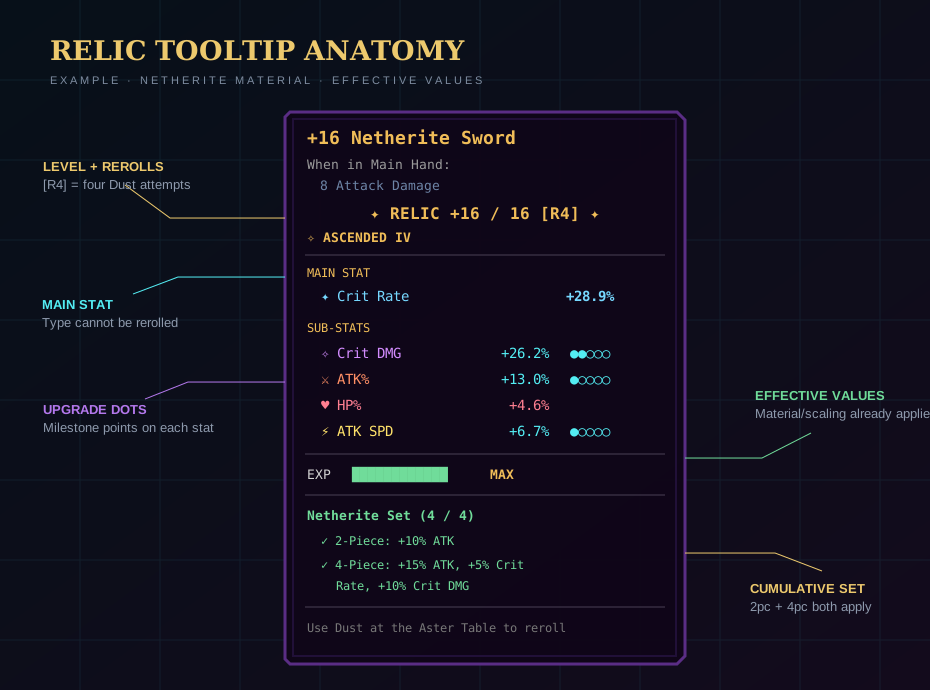
| Part | What it controls |
|---|---|
| Rarity | Starting sub-stat count and maximum relic level |
| Main stat | One slot-specific stat that grows every level |
| Sub-stats | Up to four distinct secondary stat types |
| Upgrade dots/count | How many milestone points landed on each sub-stat |
| Level | Current progression from +0 to the rarity cap |
| Relic EXP | Stored progress toward the next level |
| Upgrade seed | Locks every normal milestone result to this relic |
| Reroll count | Number of completed Dust attempts, even if Keep Old was chosen |
| Ascension state | Whether ascended and which Resonance Core level produced it |
Rarity progression
| Rarity | Starting sub-stats | Maximum level | Milestones available |
|---|---|---|---|
| Common | 0 | +4 | +4 |
| Uncommon | 0–1 | +4 | +4 |
| Rare | 1–2 | +9 | +4, +8 |
| Epic | 2–3 | +12 | +4, +8, +12 |
| Legendary | 3–4 | +16 | +4, +8, +12, +16 |
| Mythical | 3–4 | +20 | +4, +8, +12, +16, +20 |
| Supreme | 4 | +24 | +4, +8, +12, +16, +20, +24 |
Normal relic assignment and ascension use the random range above.
When data is assigned
The server queues assignment while it processes player equipment/inventory and before relevant Aster Table operations. A new eligible stack receives rarity if needed, then a relic seed and stats. The result belongs to that stack; normal milestones are not rolled at the instant you click upgrade.
Raw values versus effective values
The stat enum stores raw roll values. Tooltips and previews call RelicStatDisplay, which applies:
- Material multiplier ranges from 0.45 (wood/leather) to 1.12 (netherite).
- ATK/DEF/HP flat and percent stats have configurable scaling; defaults are usually 0.7, except flat ATK at 0.5.
- Offhand contribution defaults to 50%.
- Speed stats are finally subject to total caps.
This is why two relics with identical stored rolls can display different effective contributions.
The three kinds of randomness
- Initial roll: main stat, number/types/values of starting sub-stats.
- Milestone path: deterministic from the relic seed and milestone level.
- Dust redistribution: deliberately non-deterministic and performed only after the Dust is committed.
Ascension uses a stable seed derived from the item, rarity transition, core level, ascension level, main stat, and sub-stat types. Reopening the same preview is therefore not a reroll exploit.